
Monday – Friday:
8:00 AM – 4:30 PM
Saturday:
8:00 AM – 1:00 PM
8:00 AM – 4:30 PM
Saturday:
8:00 AM – 1:00 PM
If your car drifts to one side when you let go of the wheel, your steering wheel sits crooked on a straight road, or your tires are wearing more on one edge than the other, your alignment is off. It’s one of the most common — and most overlooked — things that quietly eats tires. A set of tires is a real expense; an alignment is a fraction of that, and it protects the investment.
Our techs set your car, truck, or SUV back to the manufacturer’s specifications, which improves handling, keeps you tracking straight, and helps a new set of tires last as long as it should. We strongly suggest checking your alignment when installing new tires or after a rough encounter with a pothole, which is all too common in this area.
Metro East roads with potholes, construction zones, and speed bumps frequently knock vehicles out of alignment. Catching misalignment early prevents expensive tire replacement and improves safety. Here are the most common symptoms we see at our Belleville shop:
Uneven or Rapid Tire Tread Wear — One side of the tire wears faster than the other.
Vehicle Pulls to One Side — The car drifts left or right when you let go of the steering wheel.
Wheel Vibrations at Certain Speeds — Often felt in the steering wheel or seat.
Crooked Steering Wheel When Driving Straight — The wheel is off-center even when going straight.
Tires Squealing on Turns — Indicates excessive tire slip due to poor angles.
Loose or Unstable Handling — The vehicle feels less responsive, especially during lane changes or highway driving.
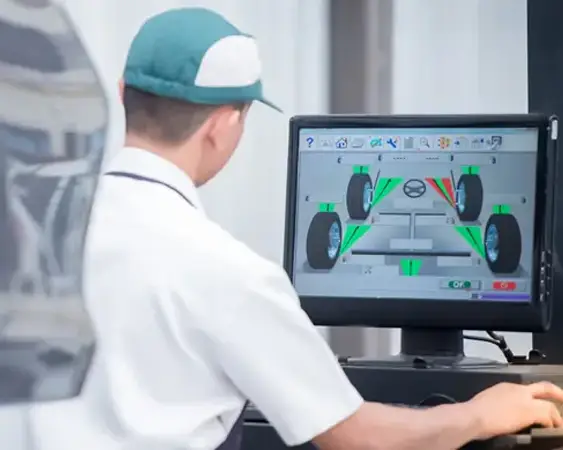
These issues are very common after hitting potholes or curbs — frequent occurrences on local roads in Belleville, Fairview Heights, and O’Fallon.
When you visit us, the process is thorough and transparent:
We perform 4-wheel alignments for cars, trucks, SUVs, and recommend combining with tire rotations or new tire installations for best results.
A: Every 6,000–12,000 miles, or immediately after hitting a large pothole, installing new tires, or performing suspension repairs.
A: It’s not recommended. Continued driving causes rapid tire wear, reduced fuel economy, and compromised safety.
A: Yes — proper alignment centers the steering wheel when driving straight.
A: Yes — we provide complimentary visual inspections and road tests with honest advice.
A: Common warning signs include drifting to one side, a crooked steering wheel, and irregular tire wear. If you are unsure, we can inspect the alignment for you.
A: Yes — it’s the best time, because it protects the tires you just paid for.
A: Depends on the vehicle; we’ll set what yours actually calls for.