Monday – Friday:
8:00 AM – 4:30 PM
Saturday:
8:00 AM – 1:00 PM
8:00 AM – 4:30 PM
Saturday:
8:00 AM – 1:00 PM
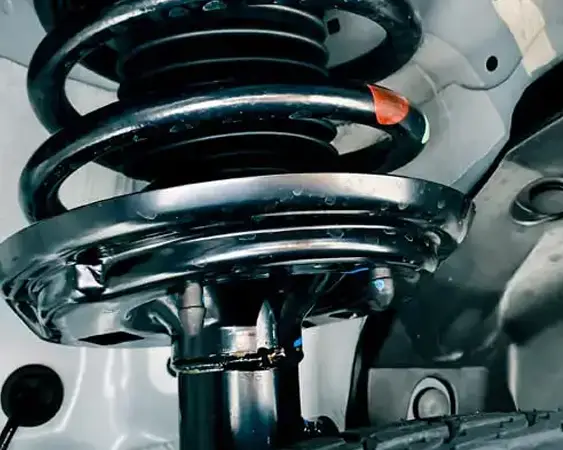
Your suspension does more than smooth out the ride — it keeps your tires planted on the road, which affects braking, handling, and how evenly your tires wear. On roads like the South Belt corridor, potholes and rough patches take a steady toll on shocks, struts, and the smaller joints that hold it all together. Most people don’t notice it going bad because it happens so gradually.
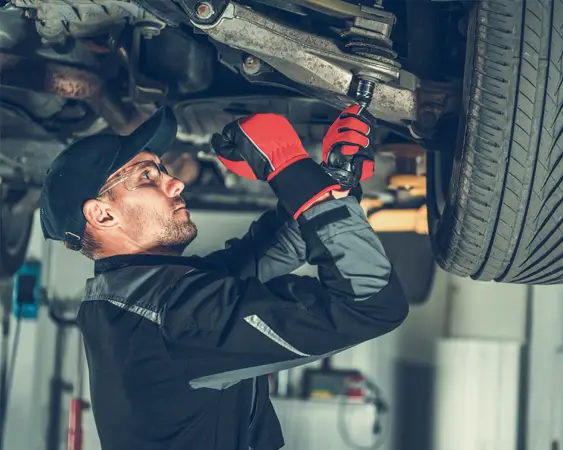
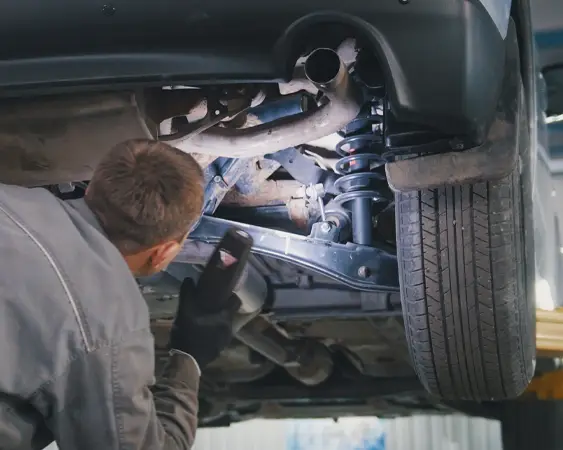
Watch for a ride that’s suddenly bouncy or floaty, clunks or rattles over bumps, the nose diving hard when you brake, or uneven “cupped” wear on your tires. Any of those is worth a look. We’ll put it on the rack, check the shocks, struts, springs, bushings, and ball joints, and tell you what’s actually worn versus what still has life left.
Metro East roads can be tough on suspension components. Ignoring these warning signs leads to faster tire wear, poor handling, and potential safety issues. Here are the most frequent symptoms we see at our Belleville shop, along with typical causes:
Often caused by worn control arms, ball joints, or alignment issues.
Especially noticeable on highways or rough pavement.
Indicates worn shocks or struts that no longer absorb impact properly.
Makes the vehicle feel unstable, particularly during turns or at higher speeds.
Over bumps or during turns, usually from worn bushings, ball joints, or sway bar links.
A classic sign of alignment problems or failing suspension parts putting extra stress on tires.
These symptoms are common after hitting potholes or navigating speed bumps, common in Belleville and surrounding areas. Our team performs complete vehicle diagnostics to pinpoint the exact cause rather than guessing.
A worn shock or strut lets the tire bounce instead of grip, wearing the tread in patchy spots and shortening the life of a set you paid good money for. Fixing suspension often protects the tires and alignment you already invested in. Since we do all of it under one roof, we can tell you how these pieces are affecting each other instead of treating them as separate problems.
We provide comprehensive repairs on all major suspension and steering parts, including:
Our technicians use quality parts and precise installation to restore factory-like handling and safety.
Illinois weather and road conditions make regular suspension checks especially important — potholes in spring and salt corrosion in winter accelerate wear.
A: We recommend inspection every 12,000 miles or annually, and immediately after hitting large potholes.
A: Yes — worn shocks allow excessive bouncing that causes tires to wear unevenly.
A: Costs vary by component. Early repairs are usually much cheaper than waiting for major failure.
A: Yes — we provide complimentary estimates with honest advice.
A: The bounce test helps — push down hard on a corner and let go; if it bounces more than once or twice, the shock or strut may be worn. We’ll confirm on the rack.
A: For a while, but handling and braking suffer and you’ll wear tires faster. It’s a safety and money issue, not just comfort.
A: Yes — we usually recommend it, since replacing suspension parts can change your alignment.